
Supported living services built around daily life, clearer routines and practical progress
Pathway Living Services provides person-centred supported living and mental health support in London for adults who benefit from structured, calm and progression-focused support.
Our services are designed around the person’s presentation, strengths, communication style, support needs, risks and realistic goals. We aim to create a safer, steadier environment that helps people feel more settled and better able to move forward.
Support shaped around the person, not a one-size-fits-all model
We support adults who may need structure, reassurance, practical guidance and joined-up planning to maintain stability, build confidence and develop everyday living skills.
Supported living
Day-to-day support with routines, independence, tenancy skills and safer living.
View sectionMental health support
Calm, structured and recovery-focused support that promotes stability and wellbeing.
View sectionComplex needs
Practical planning where people have more than one area of support need.
View sectionSupport for adults who benefit from structure, stability and person-centred planning
Our services may be suitable for adults aged 18 and over who need supported living, mental health support, daily routine support, tenancy sustainment, emotional reassurance, autism or learning disability support, or coordinated planning around complex needs.
Mental health needs
Support for adults who may need stability, routine, reassurance and risk-aware planning.
Autism and learning disability
Person-centred support shaped around communication, sensory needs, routine and independence.
Complex support needs
Support for people who may have overlapping needs requiring joined-up planning and review.
Move-on and independence
Support for people working towards stronger living skills, confidence and future progression.
Clear support planning from referral through to review
Referral and information gathering
We review referral information, support needs, risks, preferred borough, current placement situation and intended outcomes.
Suitability and risk review
We consider whether Pathway is likely to be a suitable fit, including safety, support level, environment and professional recommendations.
Person-centred support plan
Support planning considers daily routines, communication, wellbeing, practical skills, tenancy responsibilities, risk management and progression goals.
Review and progression
Support is reviewed so we can respond to changing needs, monitor progress and agree next steps with the person and relevant professionals.
Structured support that helps people manage daily life more safely
Our supported living service helps adults build confidence, maintain routines, develop life skills and work towards greater independence in a stable environment.
- Daily living routines and practical skills
- Tenancy responsibilities and home management
- Appointments, planning and community engagement
- Budgeting, organisation and household tasks
- Support with emotional regulation and stability
- Progression-focused support planning


Calm, consistent support that promotes stability and wellbeing
We support adults who may experience mental health difficulties and need a structured, compassionate and risk-aware environment to help them feel safer and more settled.
- Support to build routine, confidence and stability
- Emotional reassurance and practical coping strategies
- Risk-aware support planning and review
- Encouragement with appointments and professional engagement
- Support with social confidence and community access
- Clear communication with relevant professionals where appropriate
Support that respects communication, routine and individual presentation
We recognise that people may need support shaped around communication style, sensory needs, preferred routines, emotional regulation, confidence and day-to-day independence.
Predictable support
Support can be structured around routines, visual planning, preferred communication and consistency.
Daily living skills
We support practical skills such as cooking, cleaning, budgeting, appointments and community access.
Confidence and reassurance
Support is paced around the person, with a focus on calm engagement and realistic progression.
Practical planning where support needs overlap
Some people require support across several areas, including mental health, daily living, tenancy sustainment, risk, routines, social confidence and engagement with professionals.
- Joined-up information gathering and review
- Risk-aware support planning
- Clear routines and stability-focused support
- Support with appointments and professional engagement
- Practical help with daily living and tenancy responsibilities
- Regular reviews to support safer progression

Progression-focused support towards confidence and independence
Our aim is not just to provide a placement. We support people to build stability, practical skills, confidence and readiness for future steps where appropriate.
Building independence
Support with practical daily living skills, routines, planning, appointments and community confidence.
Reviewing goals
Support plans can be reviewed to track goals, identify barriers and agree realistic next steps.
Preparing for next steps
Where appropriate, we help people prepare for greater independence and future move-on pathways.
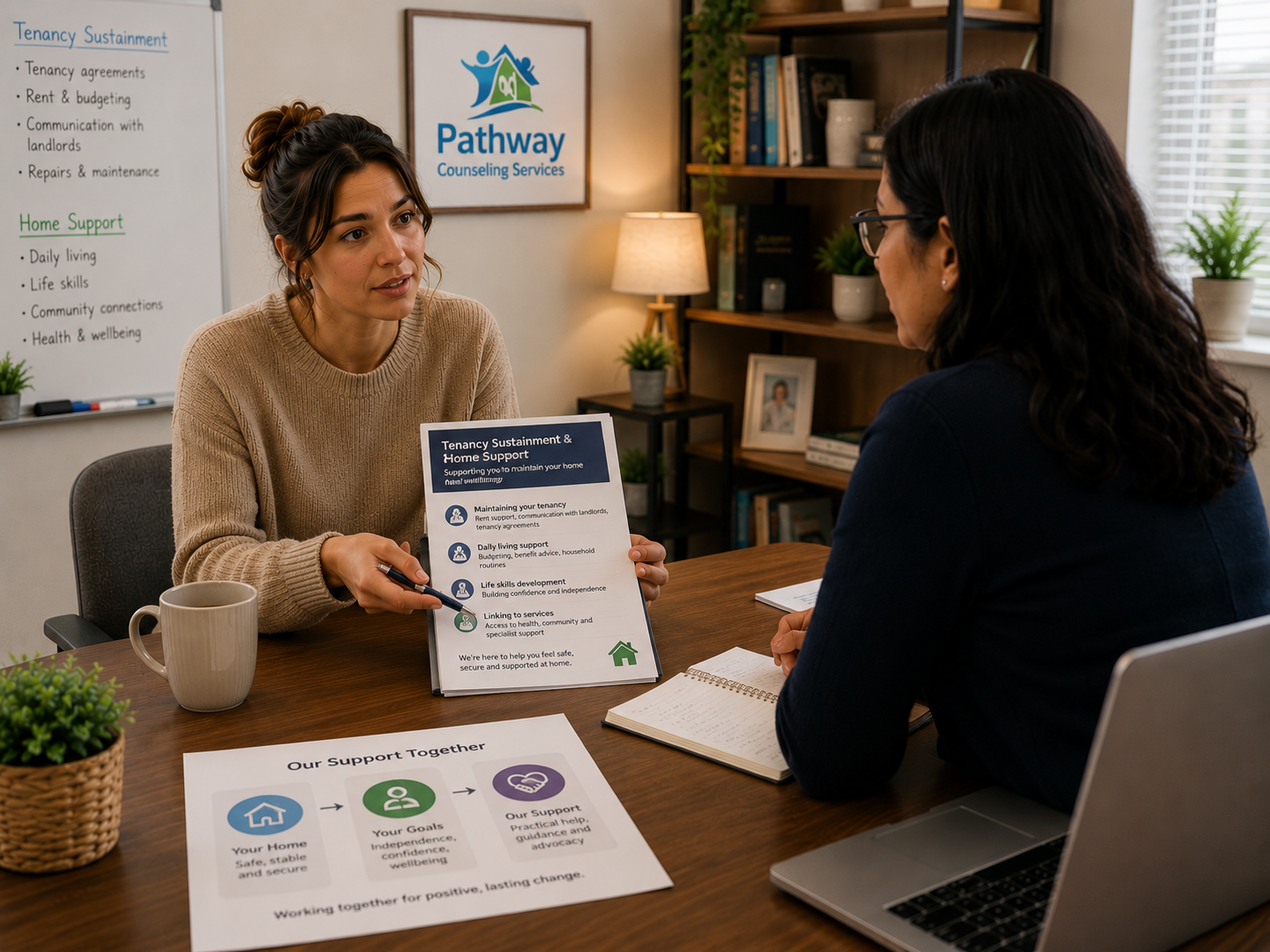
Helping people understand and manage home responsibilities
We support people to develop the practical skills and routines needed to manage their living environment, understand responsibilities and reduce risks linked to tenancy breakdown.
- Budgeting and bill awareness
- Cleaning, laundry and home routines
- Reporting repairs and managing appointments
- Neighbourhood and community responsibilities
- Support with letters, forms and practical organisation
- Planning around risks that may affect housing stability
Practical support that fits real daily life
Daily routines
Support with structure, planning, meals, hygiene, home routines and positive use of time.
Appointments
Prompting, planning and support to engage with health, social care and community appointments.
Money skills
Budgeting, spending awareness, bills, shopping planning and practical money management.
Community access
Support to build confidence, access local services and reduce isolation where appropriate.
Emotional reassurance
Calm support, listening, reassurance and practical coping strategies during difficult periods.
Medication prompts
Where appropriate and agreed, support may include prompts in line with support planning and policy.
Family communication
Where agreed, communication with families or representatives can support consistency and confidence.
Professional liaison
Joined-up working with social workers, health professionals and partner agencies where appropriate.
Not sure which support pathway is right?
We welcome early referral conversations so we can understand support needs, risks, housing stability, preferred borough, intended outcomes and whether Pathway is likely to be a suitable fit.
Clear boundaries and safe support planning
Pathway Living Services is not an emergency crisis service, hospital service or clinical treatment provider. Where someone needs urgent mental health, medical or safeguarding intervention, the appropriate emergency, NHS or statutory pathway should be used.
We review referrals carefully to understand whether our supported living and mental health support model is suitable, safe and appropriate for the person’s needs.
Looking to discuss support needs, suitability or placement pathways?
Contact Pathway Living Services to discuss supported living, mental health support, referral information, local availability or professional next steps.